Japandi Bedroom Ideas for the Room You Already Have
Create a Japandi bedroom around your existing bed, floor and wardrobe. Explore dark wood, warm textiles, practical storage and a photo preview before buying.
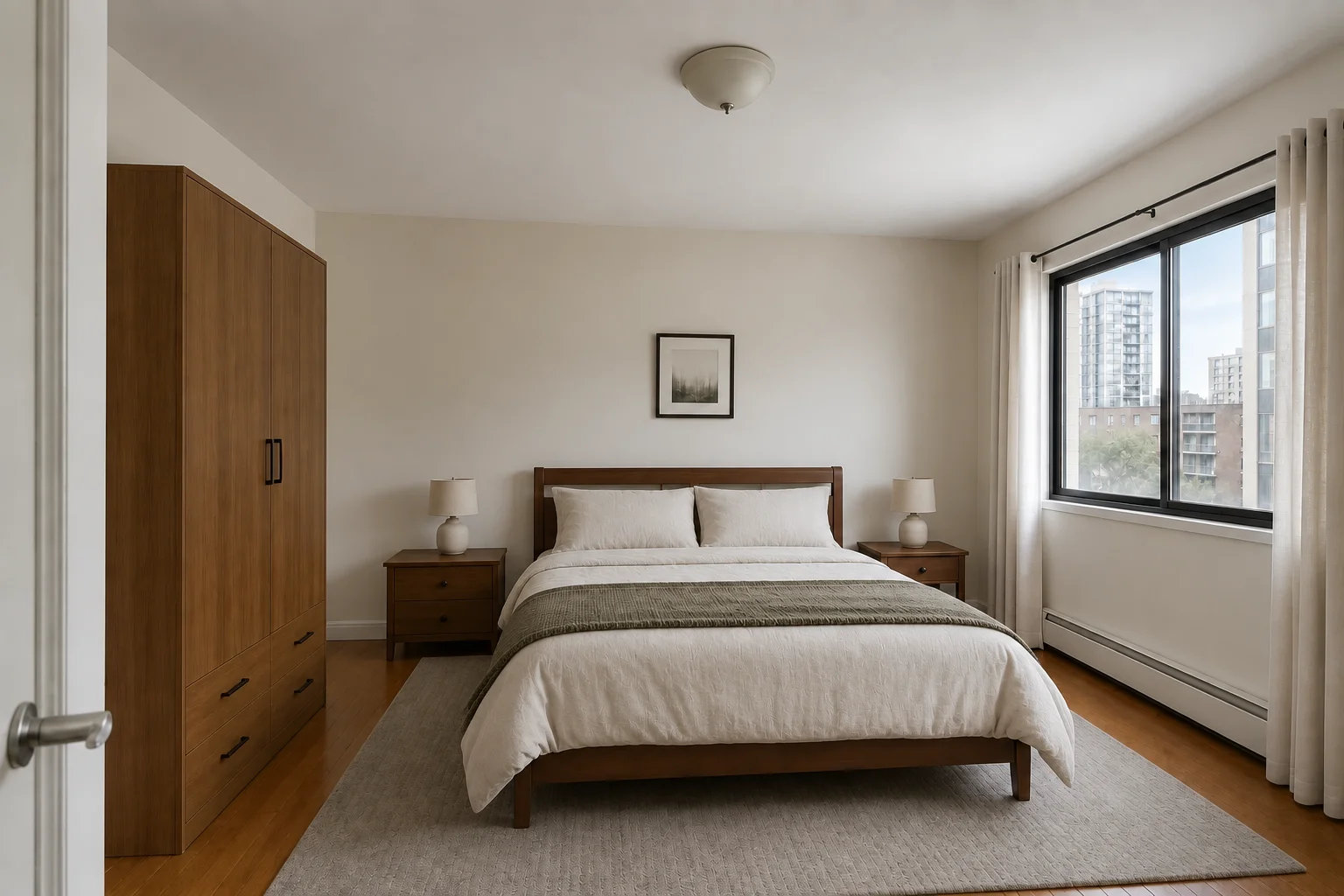
You can like a pale-oak Japandi bedroom and still own a dark bed, a gray carpet, or a perfectly useful wardrobe that you have no intention of replacing.
Start there. A style idea is more useful when it helps the room you have, rather than turning every existing item into a problem.
Japandi brings together Japanese and Scandinavian design influences. Simple forms, wood, muted colors, and comfortable textures are recurring features; IKEA's Japandi style guide describes that combination through its own room settings. In a bedroom, the practical choices are the bed's visual weight, what surrounds it, and where everyday belongings go.
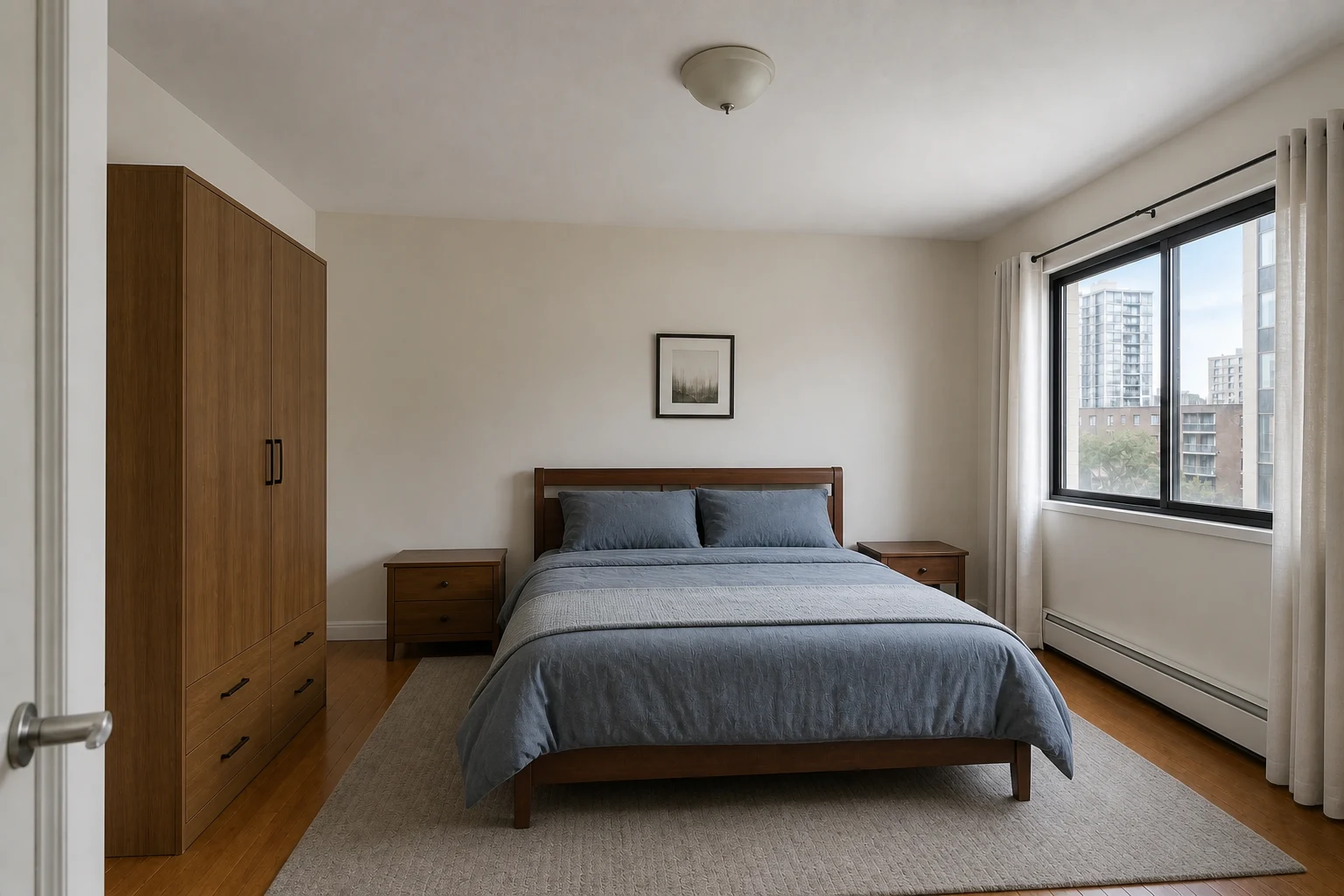
The dark bed and wooden storage stay. Off-white bedding and an olive throw change the balance of the room without replacing the main furniture.
Let the floor and bed set the palette
The floor and bed occupy too much of the view to treat them as afterthoughts. Decide whether they are staying before choosing cushions or wall art.
With a pale wood floor, try off-white bedding, a slightly darker wood bedside table, and one muted accent such as olive or clay. They do not need to match exactly. Differences in texture can give a restrained palette some depth.
With a dark bed or floor, test a more contrasting version: light walls and bedding, warm brown wood, and a small amount of charcoal. A dark timber bed does not have to become pale oak to fit the room.
For cool gray flooring, try warmer textiles and a wood tone you genuinely like beside it. If every element is the same gray-beige, the room may feel flat rather than calm. Start with the existing surface in the photograph, not a crop of the new material alone.
Give the bed a simpler outline
A lower-looking bed can make a composition feel quieter, but Japandi is not a requirement to sleep on the floor. Keep a comfortable bed height that works for you.
Before replacing the frame, try removing a bulky bench, reducing the number of cushions, or using bedding that does not spill across the walkway. Those changes may reveal enough of the frame and floor to improve the room's proportions.
For a new bed concept, ask for a simple platform outline or a plain upholstered headboard. Compare the width of the headboard with the wall behind it. A dramatic wall-to-wall panel may look good in an image while creating a much larger project than you intended.
Use texture where you would otherwise add more decoration
Start with a plain duvet cover and one contrasting layer: a woven throw, a softly textured cushion, or a rug that gives the bed a clearer place in the room.
You do not need linen, rattan, fluted wood, plaster, bamboo, and stone in the same picture. Choose a few textures with a role. A fabric lampshade can soften the bedside area; a timber table can connect with the bed; a rug can change how the space feels underfoot.
Keep room for personal objects. One picture you care about and a bedside book are more useful than filling the scene with anonymous vases to make it look styled.
Make storage part of the look
A quiet bedroom still has chargers, clothes, laundry, and things you need within reach. Removing them from a concept without deciding where they go produces a room that is difficult to live in.
A bedside drawer may work better than a tiny decorative stool if you need somewhere for medication, glasses, and cables. Closed wardrobe fronts can make the view simpler without reducing storage. Baskets can help with some items, but filling the floor with baskets creates another kind of clutter.
For a small bedroom, prioritize the path between the door, wardrobe, and bed. Measure the furniture footprint and door swing before adding a new cabinet to your shopping list.
Three directions to try, rather than one rigid formula
Light and textured: pale timber, warm off-white bedding, a woven accent, and a softly shaded lamp. This is a useful starting point when the floor is already light and the room gets generous daylight.
Dark wood and quiet contrast: retain a darker bed, use lighter textiles, and keep the wall treatment simple. A small charcoal or bronze detail can connect with the timber without turning every accessory black.
Earthy and lived-in: try a muted clay or olive accent in the bedding or a single wall, with cream textiles and warm wood. Keep the color away from every surface at once so the room has somewhere for the eye to rest.
Preview the direction before buying the pieces
Open AI Bedroom Design, upload your room photo, and choose Japandi in the style options. Add the features that need to stay in the instruction. You can adapt this example:
Restyle this bedroom in a restrained Japandi direction. Keep the existing dark timber bed, wooden floor, gray-beige rug, window, wardrobe and bedside drawers. Retain the camera view and daylight. Use warm off-white bedding, a muted olive throw, and small fabric-shaded lamps on the existing nightstands. Keep the walking route beside the bed clear. Do not add a bench or a larger bed.
That prompt combines a style with a practical brief. It also avoids asking for a showroom-sized room when your photograph shows a compact one.
Generate another direction from the same original photo. If you like a result except for one detail, use the AI Image Editor for that narrower change. If retaining the existing furniture is the whole point, start with a focused edit rather than a full restyle; our furniture-preservation guide explains that distinction.
For a bedroom whose main issue is evening atmosphere, use AI Relight to explore lighting separately. There is no need to replace the bed in the image just to see a softer bedside glow.
Keep the purchases smaller than the inspiration folder
A useful preview should help you leave some things alone.
Write down the changes you actually prefer: simpler bedding, a less bulky nightstand, a calmer wall color, or storage with closed fronts. Then list the pieces the concept retained. Both lists matter.
Take fabric and finish samples back into the bedroom before ordering. If a generated cabinet, lamp, or bed catches your eye, search for a real item with suitable dimensions rather than assuming the exact object exists for sale.
Common questions
Can a Japandi bedroom have color?
Yes. Try a restrained olive, clay, muted blue, or another color you enjoy as an accent. Judge it beside the floor and main furniture, rather than treating beige as a rule.
Does all the furniture need to be wood?
No. Upholstery, painted storage, and existing pieces can work together. A consistent scale and a limited palette are often more useful than replacing every material.
What is the smallest change worth testing?
Try bedding and bedside lighting first if the main furniture works. Those changes are easy to describe in a photo edit and can help you decide whether the room needs a bigger intervention.
Preview your own bedroom with the floor and furniture you expect to keep. The most useful version is the one you can imagine living with, not simply the sparsest image.
Try Japandi in your own bedroom
Start with your photo and the furniture you want to keep.