Small Backyard Makeover Ideas: Preview the Layout from a Photo
Plan a small backyard around dining, planting or everyday space. Compare photo concepts while keeping the patio, garden boundaries and useful routes.
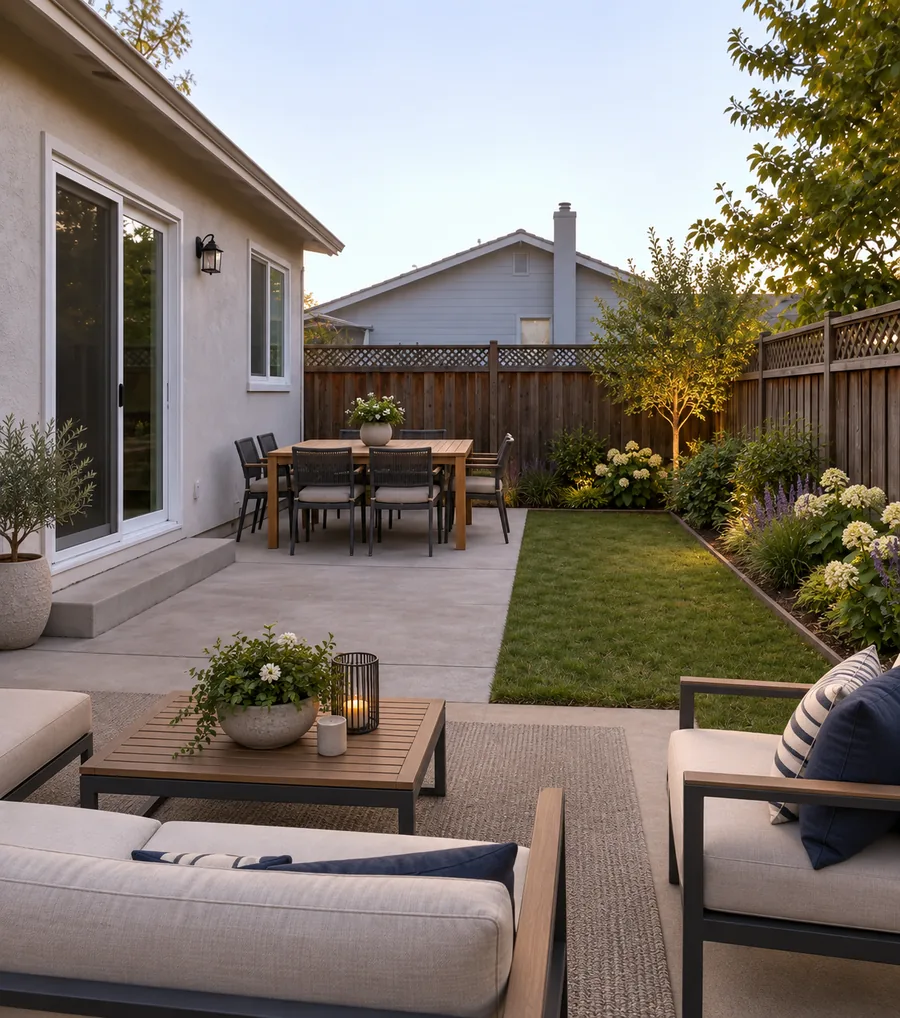
A small backyard can look beautifully furnished in a concept and still leave nowhere to pull out a chair, open the gate, or carry a watering can past the table.
Before choosing a paving color, decide what the yard needs to do. The outdoor space for weekday dinners will not be arranged quite like a garden for planting, a clear play area, or a quiet place for one chair and a book.
A photo preview helps you picture those alternatives in the yard you have. ImagineMyHouse Landscape Design supports outdoor concepts around patios, paths, planting, and living areas. Start with a useful brief rather than asking for every attractive feature at once.
Give the backyard one main job
Pick the activity that matters most, then allow the rest of the space to support it.
A place to eat outside
Prioritize the route from the house to the table, space around the chairs, and where drinks or serving dishes will go. A dining set wedged into the only route to the gate is not a good trade simply because it fits inside the photograph.
Try a compact table with planting around the edge before adding a separate lounge set. Two competing furniture zones may be more than the yard needs.
A garden with somewhere to sit
Let planting occupy more of the view, with one sitting area where you will actually use it. A bench or pair of chairs may suit the space better than a large outdoor sofa.
Think about access to the beds. A concept filled with plants right to the seat can look inviting while leaving awkward maintenance. Keep a practical route through the garden, not just a decorative path that stops at the camera.
An open everyday yard
Retain a usable open area for the things that happen most often: a dog, children playing, drying laundry, or moving equipment. Put planting and seating where they do not split that area into small leftover patches.
A yard can be attractive without being fully furnished. Empty ground in a concept is not automatically a problem to fill.
Photograph the constraints as well as the attractive parts
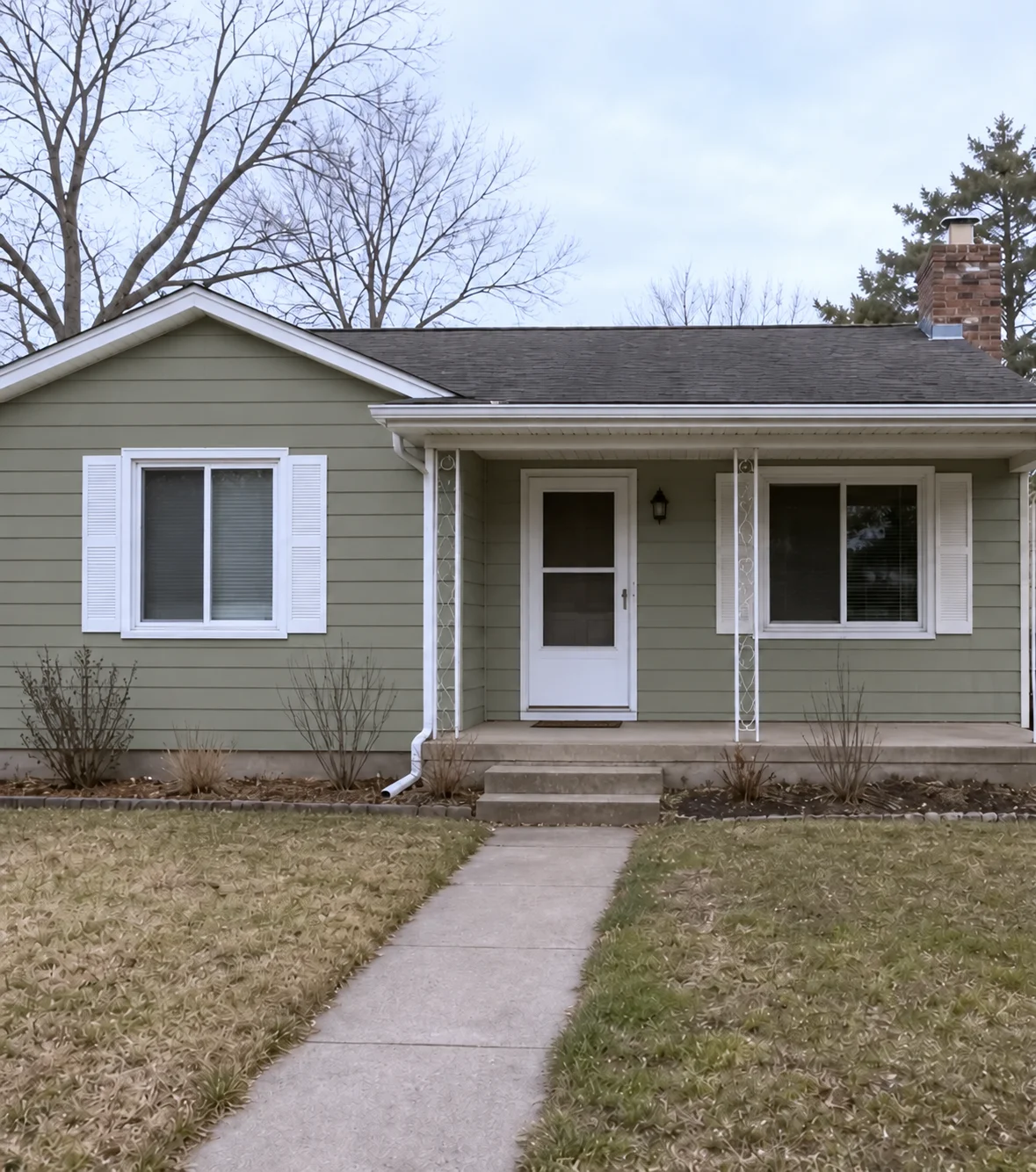
Take a view from the house or another position that shows the boundary and the important connections. Include the gate, steps, patio edge, large trees, and any shed or service area you need to reach.
Do not crop out a drain cover, side passage, or awkward corner just to make the source photo look better. Those are exactly the details a realistic layout must work around.
If one photograph cannot show the whole yard, take a second view for reference. Compare each concept with its source photo so a hidden corner or side passage is not overlooked.
A plan image answers a different question. If you already have a measured garden layout and want to give it color or presentation detail, use Plan Visualizer. Keep Landscape Design for ideas based on the yard photograph.
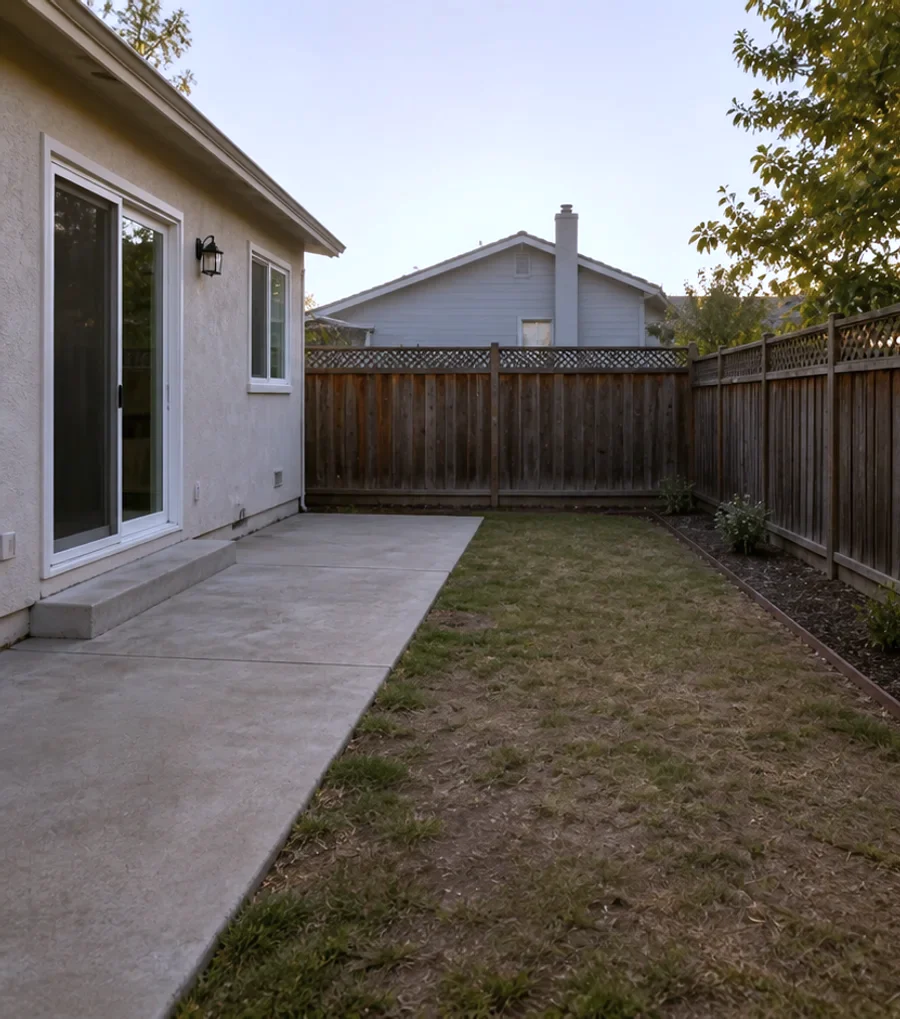
Keep the useful pieces before proposing new ones
A sound patio, established tree, useful fence, or functioning path can give the makeover its starting structure.
Write a short keep list:
Keep the existing patio by the house, the rear gate, the tree in the left corner, and a clear path along the right fence. Leave the house, doors, and garden boundaries unchanged.
Then say what you want to change: more planting beside the seating, a smaller lawn, a different surface around the table, or a clearer separation between relaxing and storage.
The RHS's Greening Grey Britain garden included practical elements such as bin and bike storage alongside planting and social space. It is a useful reminder to include everyday functions in an attractive garden brief rather than editing them out of the problem.
Compare alternatives with different priorities
Use the same original photograph for each concept. Keep the boundaries, viewpoint, and conditions consistent, then vary the way the space is used.
More room for eating outside
This concept also adds lounge seating in the foreground. If that fills too much of your patio, keep the dining area and leave out the second furniture group.
For a dining-first option, try:
Rework this small backyard around a compact four-person dining area beside the existing patio. Keep the house, patio edge, rear gate, corner tree, and a clear route along the right fence. Add restrained planting around the perimeter. Keep some open ground. Do not add a pool, outdoor kitchen, new walls, or a larger yard.
More room for growing
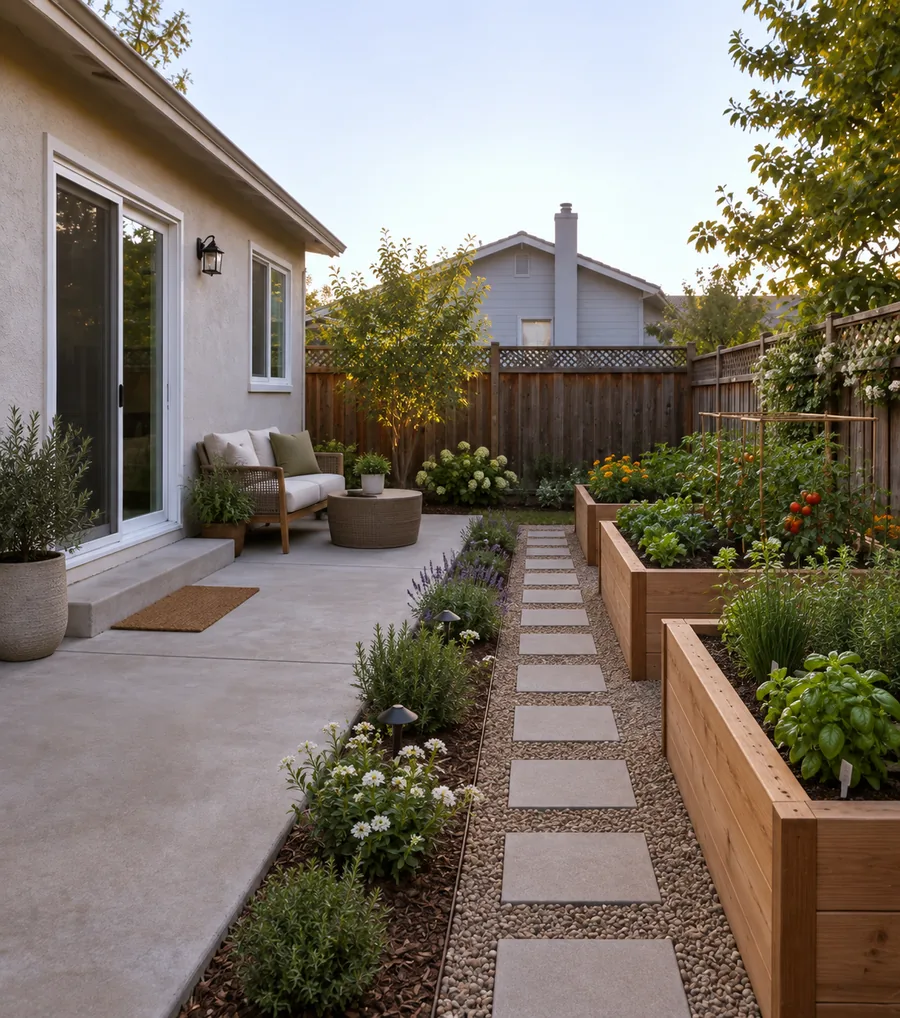
For a planting-first option:
Create a planting-led version of this same small backyard with one modest sitting area. Keep the house, garden boundaries, rear gate, patio, and corner tree. Use layered planting along the edges while retaining access for maintenance and a clear route to the gate. Avoid oversized furniture, new buildings, and elaborate water features.
Adapt both to features actually present. If the yard has no existing patio, describe the area you want to keep open rather than inventing one in the keep list.
Treat the planting as a visual direction. Before buying plants, match actual species and mature sizes to your climate, light, soil, and available space.
Look for the path that disappears in the pretty picture
Review the route from the rear door to the gate or shed first. Can you follow it without stepping through a chair or planting bed? Can the door still open?
Then look at the furniture. A smaller-than-real table can make an AI arrangement look unusually spacious. Mark the actual footprint of the furniture you are considering in the yard, and allow for chairs in use rather than pushed under the table.
Finally, check that slopes, drains and narrow boundaries remain visible. Review changes to levels, drainage or structures on site before adding them to the plan.
Refine the part you like, without adding another whole makeover
If the dining arrangement works but the planting feels too dense, edit that selected version with one focused request. For an entirely different layout, return to the original photograph instead.
Click Edit below the result, choose Basic or Pro, and paint over the area you want to adjust. Enter a focused request, such as reducing the planting beside the table, then click Apply edit. You can also upload a saved concept to the AI Image Editor.
You may also find that the best option is the least extensive: keep the patio and lawn, add useful seating, and improve one boundary with planting. Save that version beside the larger makeover. It gives you a choice about how much work to take on.
Preview a backyard concept from your own photo with the main activity and must-keep features written down. The useful result is the one that gives daily life a place, not the one that fits the most features into the frame.
Picture a backyard you will use
Upload your yard photo and choose the activity that matters most.