How to Compare Exterior House Color Schemes from Your Own Photo
Compare exterior house colors around your existing roof, brick and windows. Preview body, trim and accent combinations using the same photo and daylight.
A white house with a black roof may look convincing in an inspiration photo. That does not tell you how the same palette will work with your red roof tiles, cream window frames, or brick you are not painting.
A useful exterior color comparison starts with those fixed finishes. Put the colors on a photo of your own house before turning the whole project into a list of replacements.
You can explore coordinated facade ideas with ImagineMyHouse Exterior Design. For repainting one visible surface while keeping everything else as close as possible, use a more focused image edit.
Write a keep list before choosing paint
Look at the largest things you are unlikely to replace: roof, unpainted brick or stone, window frames, paving, and garage door material.
These features already establish a palette. If a generated concept turns red brick into pale stone or replaces a brown roof with charcoal, you are no longer comparing paint alone.
A short keep list might read:
Keep the red brick on the ground floor, the dark brown roof, the existing cream window frames, the garage door panels, and the front path. Change only the painted siding and front door.
Include the location of each surface when the facade has several materials. “Keep the brick” may be ambiguous if there is a brick wall, chimney, and garden boundary in the same image.
Separate body, trim, and accent
Think of the facade as a few connected color decisions.
Body is the main paintable wall or siding area. It takes up the largest portion of the image and usually has the strongest effect on the overall impression.
Trim outlines parts of the building. Decide which window surrounds, fascia, porch posts, or other details you actually intend to paint. Trim does not have to include every frame, gutter, and door.
Accent gives emphasis to a selected feature, often the front door. If the garage occupies a large part of the facade, a dark contrasting garage door can become the main accent whether you intended it or not.
Start with the body color. Keep the trim and door consistent while you compare two body options, then refine those smaller decisions. This makes it easier to identify the change you prefer.
Build a shortlist around the fixed materials
Start with the materials you are keeping:
| Feature you are keeping | Body color to explore | Trim direction | Possible accent |
|---|---|---|---|
Red brick and a brown roof | Warm off-white or muted olive | Cream rather than a stark white | Deep green or an existing timber door |
Gray stone and a charcoal roof | Soft white or subdued gray | A quieter gray or dark detail | Muted blue or warm wood |
Cream masonry and warm paving | Pale putty or a gentle sage | Warm white | Brown-black or a darker green |
Timber details on a simple facade | Off-white or a muted mid-tone | Close to the body for less contrast | Retain the timber as the accent |
Use these to produce noticeably different options. Five almost identical shades on a screen are less useful at this stage than two clear directions you can later narrow with physical samples.
Photograph the whole facade in ordinary daylight
Use a level view that shows the roof, entry, garage if present, and enough of the surrounding paving to understand the palette. Avoid cutting off the roof just to make the painted wall larger in the frame.
Neutral daylight or an evenly overcast scene makes a useful reference. A strong sunset or a very dark shadow can dominate the apparent color.
Keep the photo, crop, and requested weather consistent while comparing paint. If one option is shown at dusk with glowing windows and another in flat daylight, you may be choosing the presentation rather than the palette.
You can explore a different time of day after narrowing the colors. It should be a separate question.
Choose a full-facade concept or a color-only edit
Use Exterior Design when you want to compare a coordinated facade direction, such as siding and trim together. The tool supports style choices, environment options, and written details. Use the same source and environmental conditions for competing palettes.
For an isolated recolor, open the AI Image Editor. Adapt this example to your facade:
Repaint the existing upper-floor siding muted sage green and the paintable fascia warm off-white. Keep the ground-floor red brick, brown roof tiles, cream window frames, garage panels, driveway, trees, and front steps. Retain every opening, the roof shape, daylight, and camera view. Do not replace materials or add architectural features.
For a different body color, reuse the original and change “muted sage green.” Avoid adding “modern luxury renovation” unless you are genuinely inviting wider changes.
Zoom in on the roof, windows and other features in your keep list before evaluating the color.
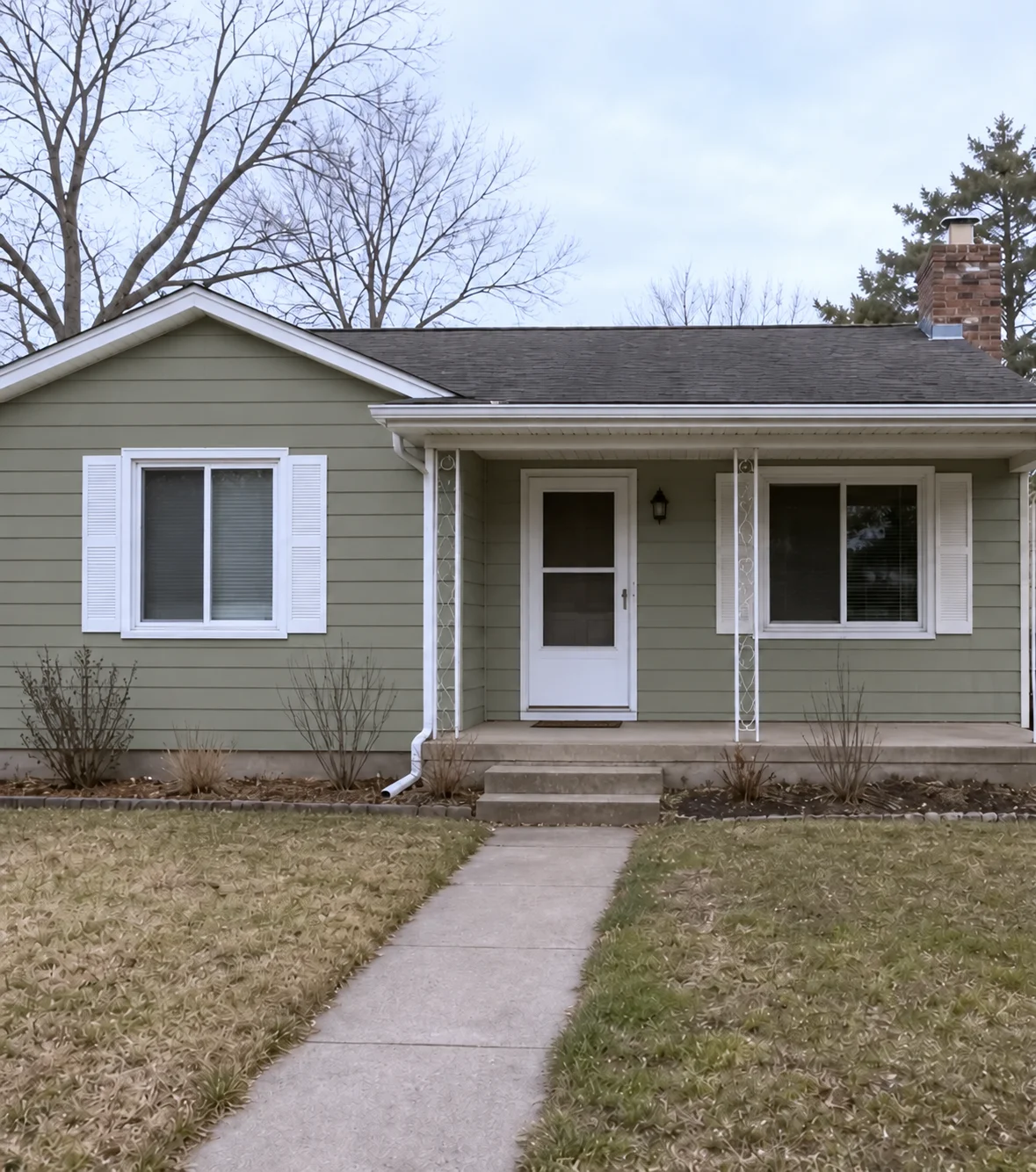
Example: cream or sage siding with the same roof
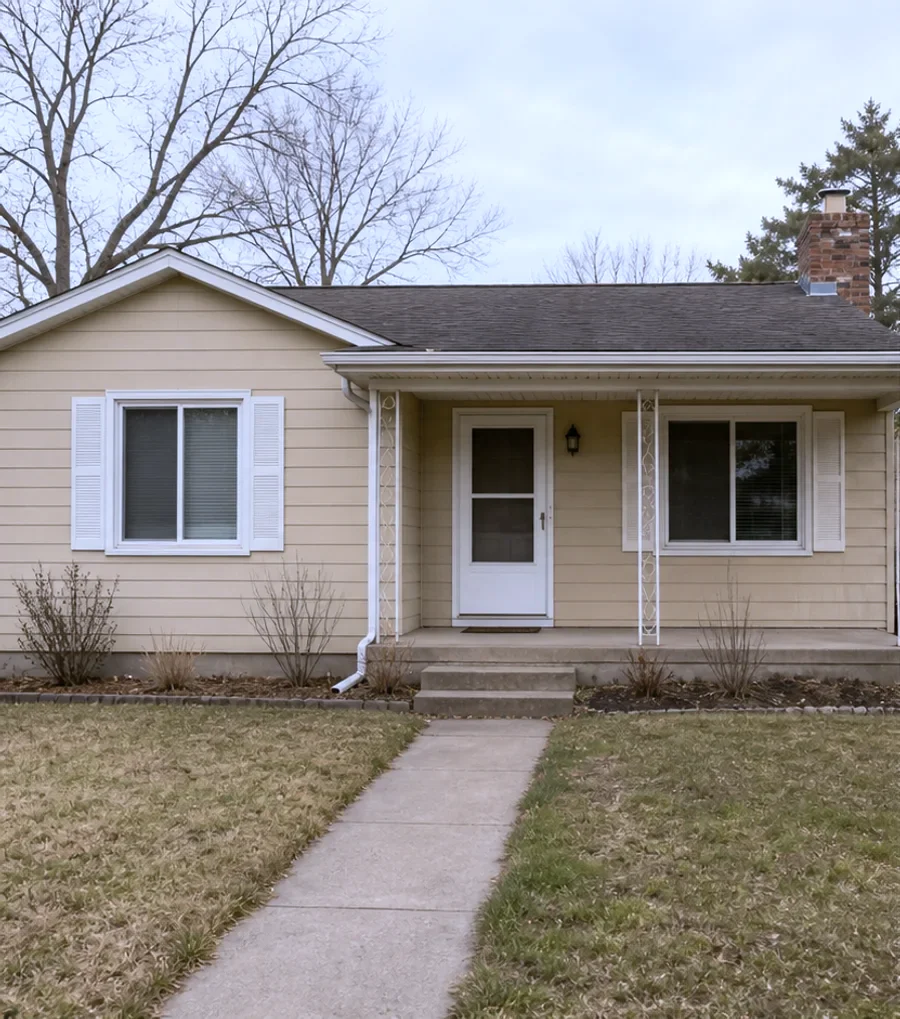
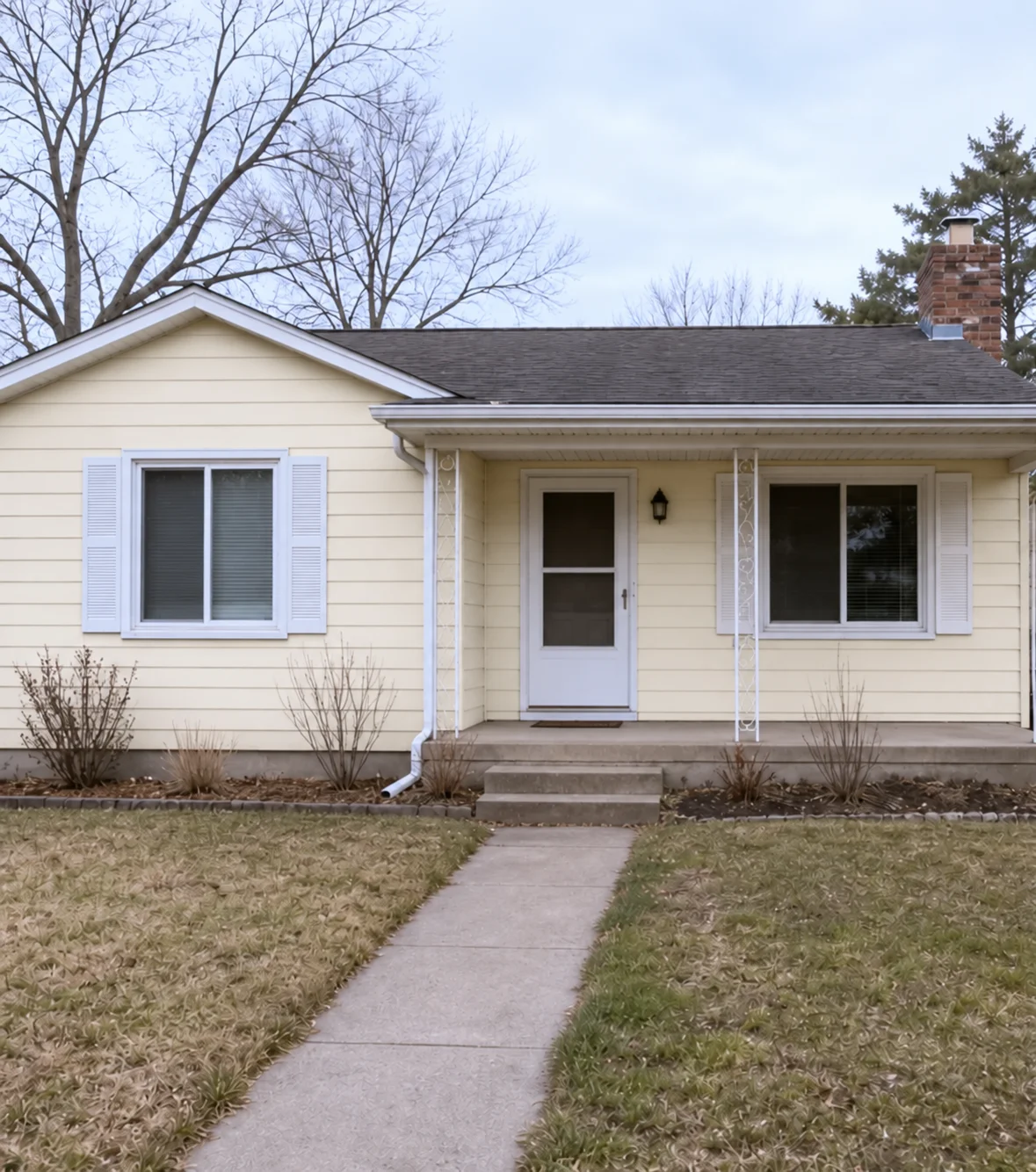
Both directions start with the same house photo. Compare the siding beside the gray roof and brick chimney, then decide whether you prefer the quieter cream or the stronger contrast of sage.
Judge the scheme from the street and up close
At a small image size, ask where your eye lands. Does the entry read clearly? Has the garage become the strongest feature? Does the roof seem disconnected from the walls?
At a larger size, inspect the color junctions: trim against masonry, siding beside the roof, and the door against its surround. Also check whether gutters, window counts, porch proportions, or landscaping changed. Those differences can make a scheme look better for reasons unrelated to paint.
Keep the shortlist short enough to test physically. Give each option a useful name, such as sage-cream-existing-brick, rather than “version 17.”
Finish the decision with real samples
Once the combinations are clear, choose manufacturer samples close to the colors you prefer. Benjamin Moore organizes its exterior color examples by body, trim, and accent, which is a useful way to record your own shortlist too.
Use suitable test panels or samples according to the manufacturer's instructions, and view them beside the actual roof and masonry in different daylight. Before selecting a product, confirm compatibility with the surface you intend to paint; brick, render, wood, and vinyl do not all have the same preparation or coating requirements.
Keep a photo of each sample combination and a note of the exact product and finish. The AI concept helps you decide what to sample; the physical facade helps you settle the final choice.
Preview your exterior color directions with the roof and materials you are keeping. A useful concept should reduce the number of decisions left to make, not quietly turn a repaint into a different house.
Find a color scheme for your house
Upload your exterior photo and describe the roof, brick and other finishes you want to keep.