How to Choose Wall Colors Without Changing Your Flooring
Compare cream and sage green walls around warm wood flooring, white baseboards, and a blue sofa using your own room photo.
Use a photo that shows your flooring, baseboards, and furniture together. Compare two wall colors generated separately from that same original, keeping the painted area and quality consistent. Check that the floor and lighting remain suitable for comparison, then choose the actual paint using samples in your room.
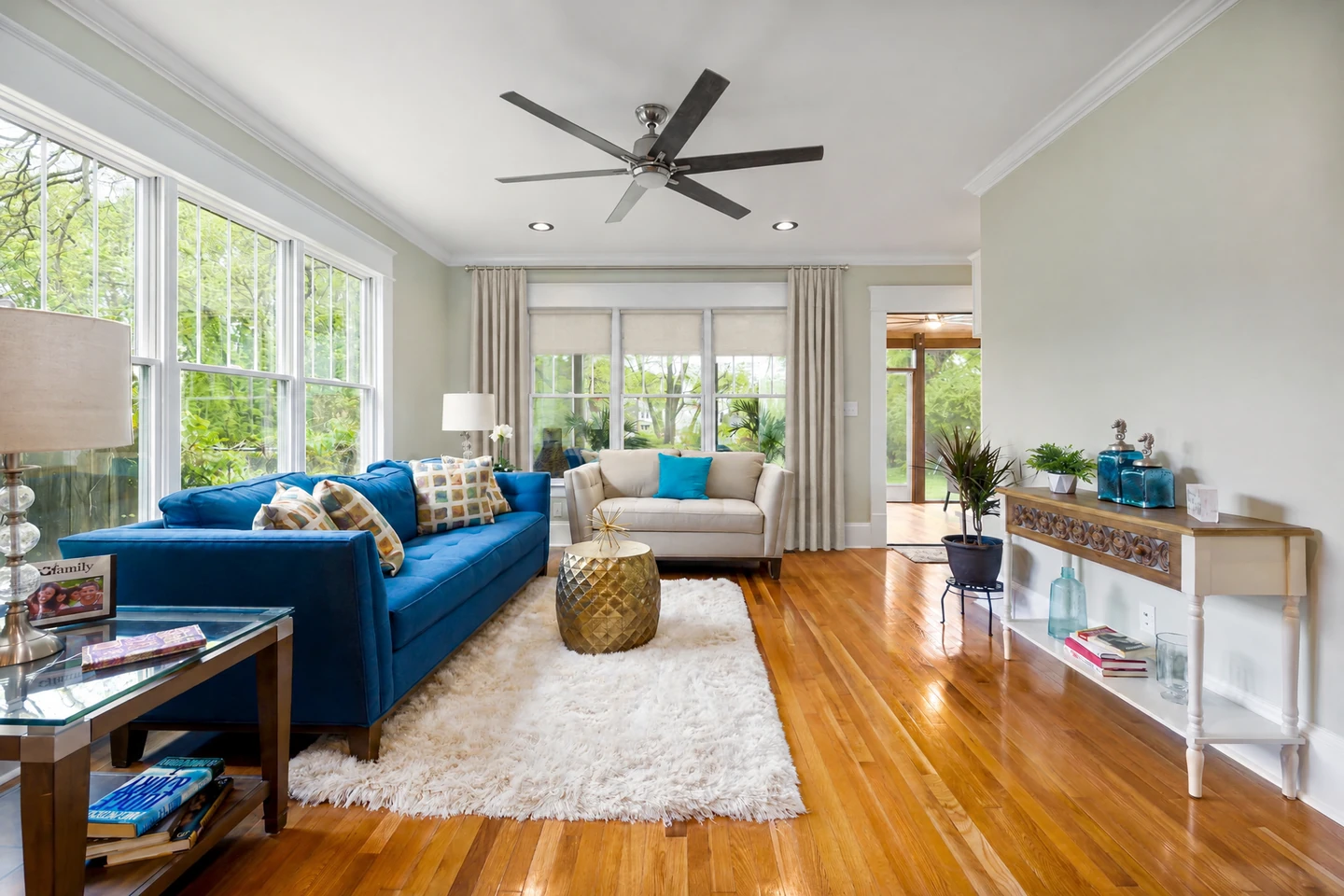
Your flooring is staying, so use it as a starting point rather than something the new paint must disguise. Compare wall colors beside the floor, baseboards, and sofa together. The useful result is a shortlist for paint samples, not a redesigned room with different furniture.
Read the floor and trim before choosing paint
Look at the visible wood near the wall. Does it lean toward honey, red, or a cooler gray? Describe that existing color in your instructions so the comparison does not quietly replace it with a different finish.
White baseboards deserve attention too. They form a boundary between the new paint and the wood. A cream wall may look appealing across a large surface but need a closer check where it meets that white edge.

Give the two colors different jobs
Try soft cream-white as a warmer direction and sage green as an alternative alongside the blue sofa. Neither is automatically the right answer for warm wood.
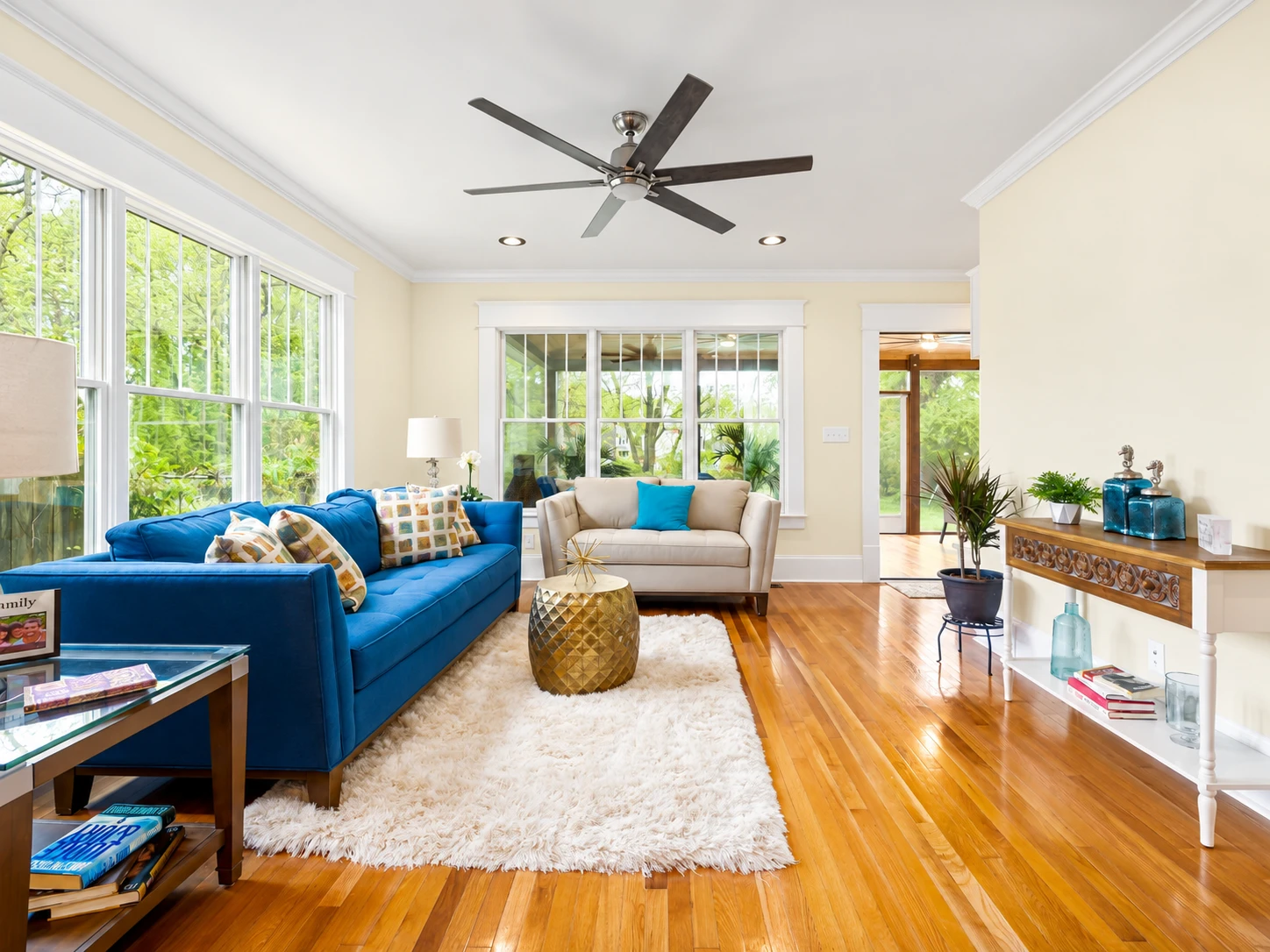
Ask two specific questions: does the cream feel too yellow beside the baseboard, and do you like the sage green with both the blue upholstery and the floor? This is more useful than judging each wall color in isolation.
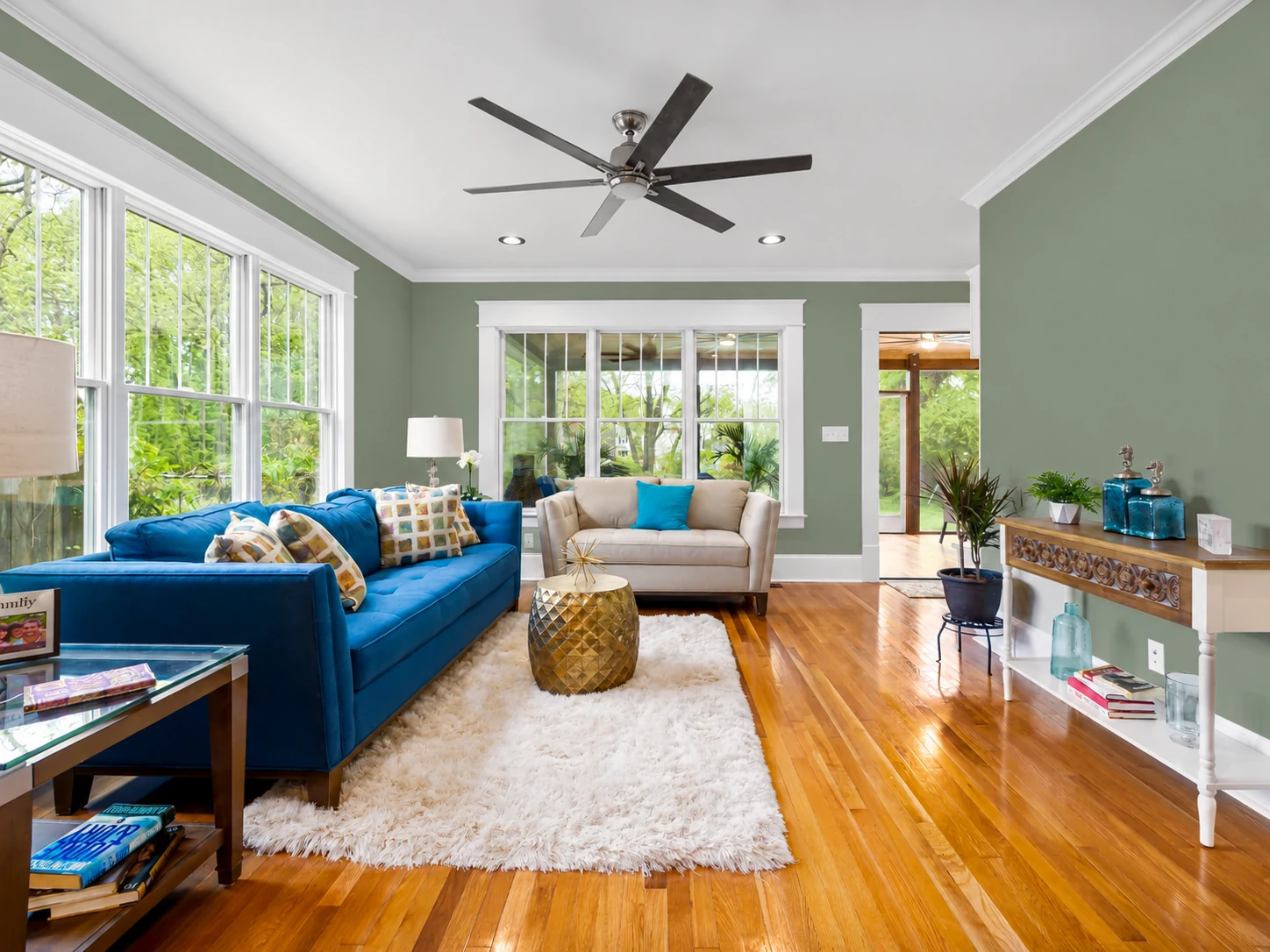
AI-generated illustrations for comparing wall-color choices with the same fixed furnishings and finishes.
Keep the comparison consistent
Upload your photo to ImagineMyHouse’s Wall Color Visualizer. Choose from six starting colors, including Sage (#899581), or set a custom color using HSV or HEX.
Decide whether you are painting all walls or one accent wall, then keep that scope for both versions. An accent wall is identified through a written description, such as “the wall behind the blue sofa”; you do not manually outline it in this tool.
Use the same quality and generate each option separately from the original photo. Sign in to generate; the button shows the credit cost first.
For the cream option, use Details to request:
Change only the walls to a soft cream-white with little yellow. Keep the warm wood floor, its grain and finish, the white baseboards, the blue sofa, and all other furniture. Preserve the ceiling, windows, lighting, and camera view. Do not change the layout or add decoration.
For sage green, change the selected color and the opening color description, leaving the rest of the request unchanged.
Reject comparisons that also change the floor
Check the floor tone, sofa fabric, baseboards, and lighting against your original. A wall color should not win because the wood was made paler or the room was brightened.
For major unintended changes, restart from the original with a narrower request. For a small paint edge, open Edit beneath the chosen result. In the image editor, mark the affected edge with the brush and inspect its surroundings again afterward.
Make the final decision with paint samples
Test your two finalists in the actual room, close to the baseboard and within view of the sofa. Compare them in daylight and under the lights you use at night.
A custom screen color is not a match to a manufacturer’s paint code. Use the visualization to choose a direction, then select the real paint and finish from physical samples against the flooring you are keeping.
Find a wall color that works with your floor
Compare paint directions on your own photo while keeping the finishes and furniture that matter.