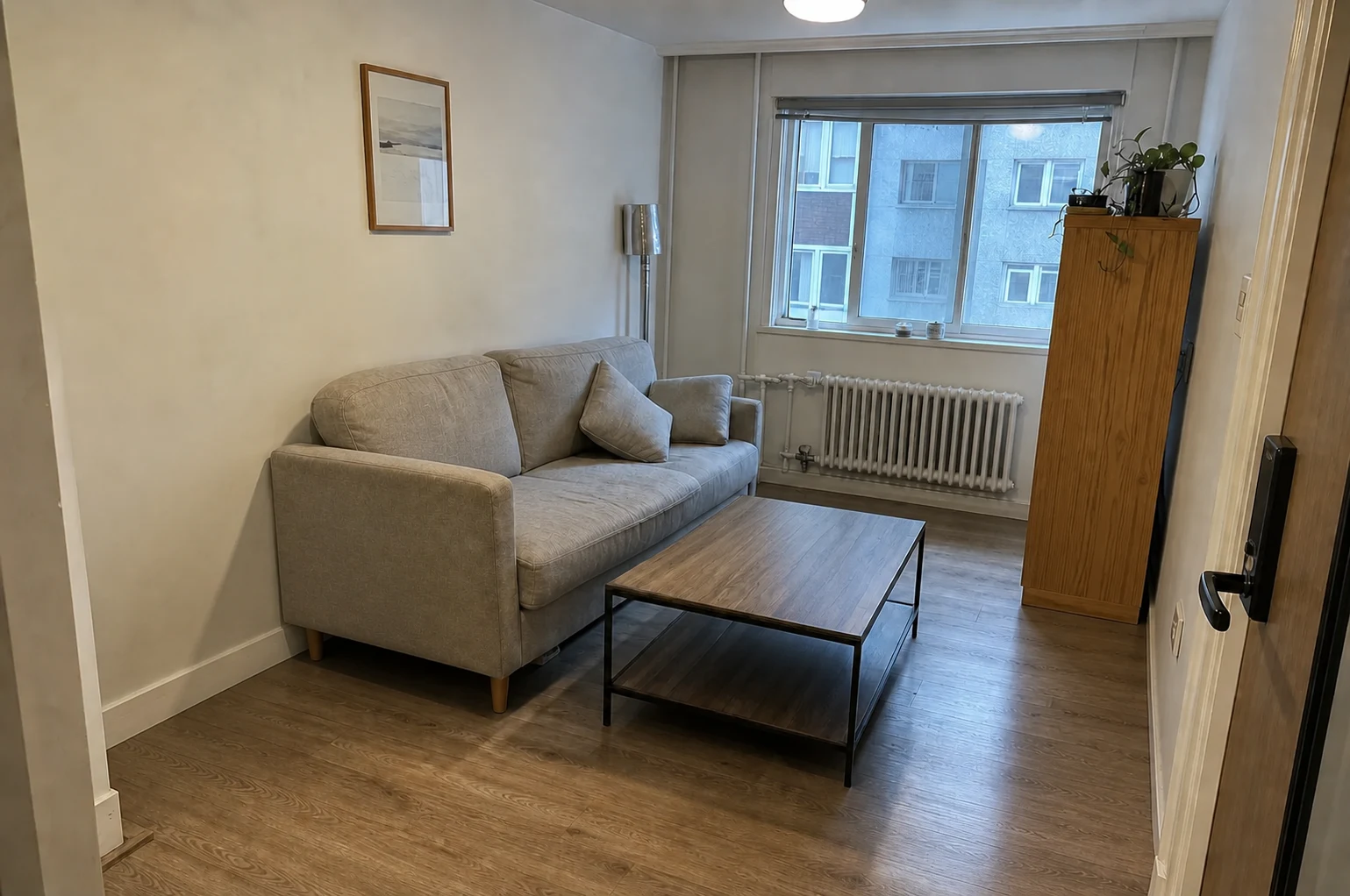
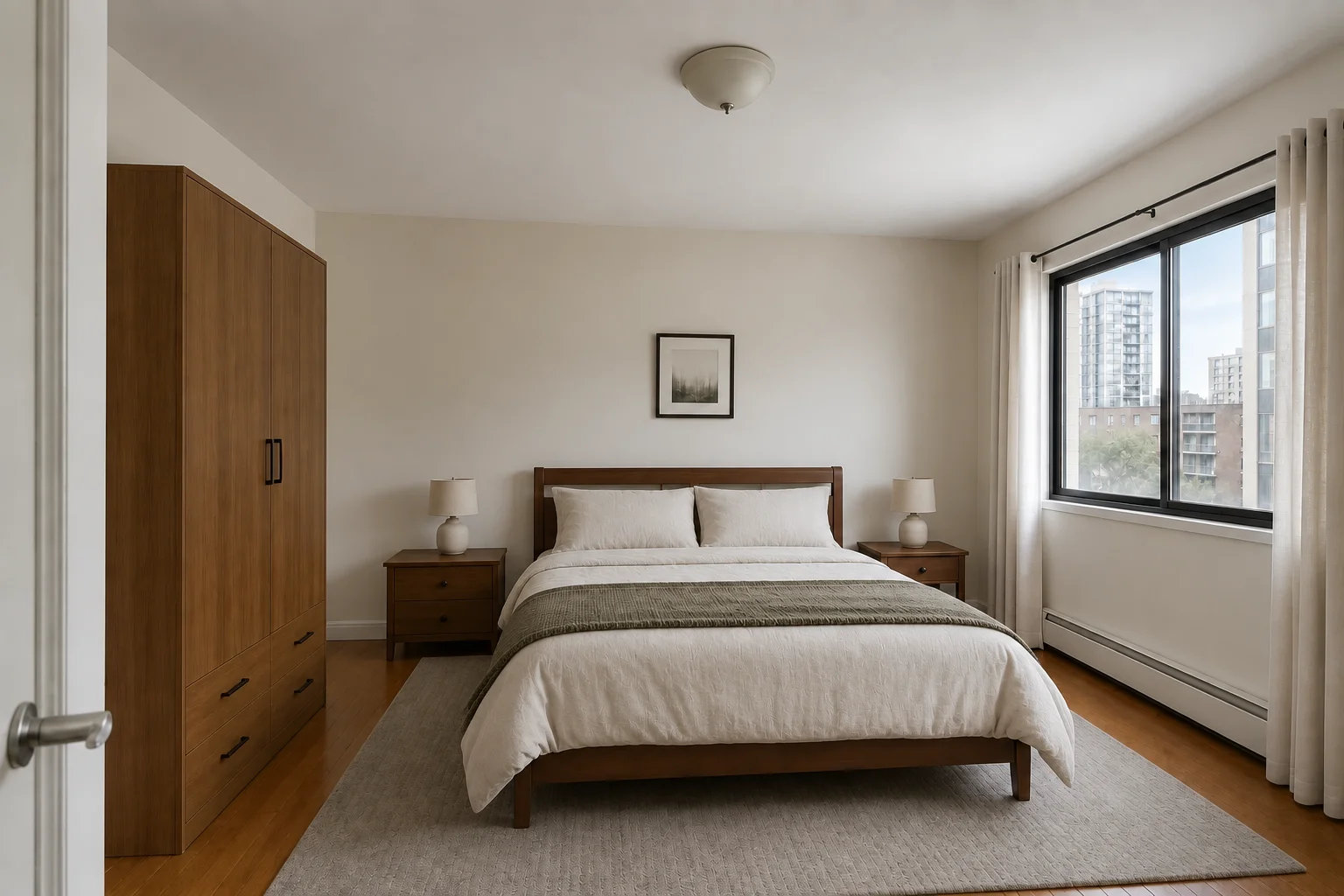
How Much Does It Cost to Furnish an Apartment in 2026?
Plan your apartment furnishing budget with a $2,700 one-bedroom example, an itemized shopping list, and a $200 refresh that keeps your existing furniture.

For a budget-conscious, mostly new setup in the US, plan on roughly $1,500–$3,000 for a studio, $2,000–$4,500 for a one-bedroom apartment, or $3,000–$6,000 for a two-bedroom. Those are DIY planning budgets for furniture and everyday essentials, before sales tax, delivery, and paid assembly—not national averages. Buying secondhand or bringing furniture you already own can reduce the total substantially.
A useful budget starts with what is missing, not how many rooms you have. Someone arriving with a bed, sofa, and kitchen supplies has a very different shopping list from someone moving in with two suitcases. Below, we build a one-bedroom example that comes to about $2,700 with a checkout buffer, then look at a smaller question: what if your room needs a refresh, not new furniture?
Apartment furnishing costs at a glance
These ranges assume you shop at budget retailers, choose standard sizes, and assemble furniture yourself. They include a bed and mattress, seating, an eating surface, basic storage, lighting, bedding, and starter kitchen and bathroom supplies. They do not include rent, a deposit, movers, appliances, electronics, or renovation work.
| Apartment | Furniture and essentials budget | What changes the total most |
|---|---|---|
Studio | $1,500–$3,000 | Whether you buy both a bed and sofa, and how much storage the apartment already has |
One bedroom | $2,000–$4,500 | Mattress and sofa choices, a separate dining set, and window coverings |
Two bedrooms | $3,000–$6,000 | A second bed and mattress, more bedding and storage, or a desk setup instead of a guest bed |
A two-bedroom does not automatically cost twice as much as a one-bedroom: the kitchen supplies, sofa, and dining table are usually shared. A large studio can cost more than a small one-bedroom if you fill it with extra seating and storage.
Higher quotes are not necessarily unreasonable. Furnishr's apartment furnishing guide describes a more complete, higher-quality setup and lists $8,400–$12,400 for a living room, dining room, and bedroom combined. That is a different shopping brief from the basic retail example below. Compare what is included before comparing totals.
A one-bedroom shopping list for about $2,700
Here is a concrete starting point for one person or a couple: a queen bed, one sofa, a compact dining table, and useful basics. The apartment already has kitchen appliances and a built-in closet; there is no separate home office or new TV in this budget.
We checked the four linked IKEA US listings on September 7, 2026. Those rows are advertised product prices for the named variants. The remaining rows are spending allowances you can replace with your own choices. Local stock and checkout charges depend on where you live.
| Item | Amount | Product example or allowance |
|---|---|---|
Queen bed and mattress | $698.00 | MALM with VALEVÅG medium-firm mattress, including slats and center support |
Sofa | $399.00 | |
Table and four chairs | $129.99 | |
Coffee table | $29.99 | |
Extra clothing storage | $150.00 | Allowance for a small dresser or shelving; the closet handles hanging clothes |
Bedside surface | $45.00 | Allowance for one small table |
Lamps and bulbs | $75.00 | Allowance for basic bedside and living-area light |
Living-room rug and pad | $120.00 | Allowance |
Bedding | $150.00 | Allowance for sheets, pillows, comforter, and mattress protector |
Window coverings and hardware | $100.00 | Allowance for two modest windows |
Kitchen, bathroom, and cleaning basics | $250.00 | Allowance for cookware, dishes, utensils, towels, shower supplies, bins, and cleaning tools |
Item subtotal | $2,146.98 | Before checkout charges |
For a worked checkout example, add $171.76 at an illustrative 8% sales-tax rate, $150 reserved for delivery, and $200 for forgotten items. That brings the plan to $2,668.74—round it to $2,700. Use your local tax rate and actual delivery quote; the $150 is an allowance, not an IKEA shipping offer. Paid assembly would be extra.
That last $200 is worth protecting. A shower curtain without rings, a lamp without a bulb, or a pan without a cooking utensil can leave you shopping again on move-in day.
Subtract what you already own
If you are bringing a usable bed frame, mattress, and sofa, remove $1,097 from this example. The item subtotal falls to $1,049.98 before tax and delivery. If you also have dishes, bedding, and window coverings that fit, cross those off too.
Do not spend the savings automatically. Live with the room before ordering the sideboard, second nightstand, or accent chair. You may discover that the empty corner is useful walking space.
Spend on daily use before matching finishes
Try the mattress and sofa for comfort when possible. A slightly mismatched side table is usually easier to live with than a sofa you dislike sitting on. For a short lease, check whether large pieces can be disassembled and carried into the next place.
Measure the furniture, the route into the apartment, and the space it needs in use. A dining table's listed width does not include pulling out the chairs; a dresser's footprint does not include opening its drawers. Mark the main pieces on the floor with tape before buying.
Already have furniture? Try a $200 refresh first
A full-apartment budget is the wrong starting point if the room is already functional. Take this small living area: the red sofa, wooden tables, TV, and plant already give it a clear identity. Replacing the red sofa with a fashionable beige one would create a much larger bill than changing the textiles around it.

In the AI preview, the sofa is still the strongest color in the room. The plain rug stops competing with it, the cream throw connects it to the light floor, and the olive cushion picks up the plant. Clearing the loose ornaments leaves more of the coffee table usable. There is no new floor, paint job, fitted storage, or lighting installation to pay for.
For a refresh like this, set a $200 ceiling before shopping:
- Rug and suitable non-slip pad: $110.
- Two cushion covers, reusing existing inserts: $25.
- One throw: $25.
- Small tray for the remote: $10.
- Tax and delivery reserve: $30.
Total limit: $200.
These are shopping caps, not prices for the exact objects in the AI image. If a rug in the right size uses too much of the budget, keep the current rug and try the covers and throw first. Clearing surfaces costs nothing, and an existing plate can do the tray's job.
You can preview a small edit on your own room photo with a brief like this:
Keep my sofa, tables, floor, walls, windows, furniture positions, and daylight. Change only the rug, two removable cushion covers, and one throw. Use a plain oatmeal rug, cream and muted olive covers, and a cream throw. Clear loose clutter. Do not replace furniture, repaint, add built-ins, or redesign the lighting.
Name the things you can actually buy rather than asking the AI to “make a $200 room.” Choose the combination in the image, then price those few items in the size you need.
What to buy first when the apartment is empty
Buy in the order you will use things, not the order a finished-room photo displays them.
- First night: a place to sleep, bedding, window privacy, a working light, towels, shower essentials, and a few kitchen basics.
- First week: somewhere to sit and eat, enough clothing storage, and a practical place to work if you need one.
- After you have lived there: rugs, additional tables, art, and any storage you still need. Check where your bags, shoes, and laundry actually accumulate before adding cabinets.
With an all-in budget of $1,000, a full new setup like our example will not fit. Start with sleep and daily essentials, keep or buy used hard-surface pieces, and delay the rest. Check secondhand items in person for condition, odors, missing hardware, and the cost of getting them home. Do not assume a free sofa is free once transport and cleaning are added.
For an empty room, Virtual Staging lets you preview a furnished version before shopping. Specify only the pieces you are considering, keeping the existing floor and walls. Use the image to decide which pieces you need, then check actual product dimensions and delivered prices against your budget. You do not need to fill every visible gap.
Is $5,000 enough to furnish an apartment?
For a budget-conscious one-bedroom, yes: it leaves room above the approximately $2,700 example for a better mattress or sofa, a desk, more storage, or paid help. It is not a requirement to spend the whole amount. Choose the upgrades that solve a problem in your daily routine.
For two bedrooms, decide what the second room needs before splitting the money. A full-time bedroom needs another sleep setup and bedding; an office may need a good desk and chair instead. A rarely used guest room can wait while the main living areas become comfortable.
Costs to check before you place the order
The easiest budget to overshoot is one that includes every piece of furniture but none of the costs around it. Check these before paying:
- Delivery and building access: curbside and room-of-choice delivery are different services. Check stairs, elevator bookings, and whether you need help carrying boxes.
- Assembly and installation: check whether slats, support beams, mounting hardware, and bulbs are included. Follow the manufacturer's anchoring instructions for storage furniture; a rental does not remove the need to secure it safely.
- Returns: check the return window, condition requirements, and who pays return shipping before ordering a large piece you have not tried.
- Your actual household: add a desk, extra place settings, children's furniture, or a second nightstand only where needed. Our example does not quietly include them.
Keep a simple list with four columns: item, keep or buy, maximum spend, and delivered cost. Once those numbers work, use a room preview to narrow the colors and shapes. The useful result is a smaller, more confident shopping list—not a picture that persuades you to replace everything.
See what is worth changing before you shop
Upload your room photo, keep the furniture you like, and preview a few focused changes.